News
Categories
Recent Articles

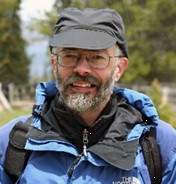
In Memoriam Richard Malcolm Brown Jr.
The wood science and cellulose research community mourns the loss of Richard Malcolm Brown, Jr., who died on December 20, 2025, at age 86. His discoveries in cellulose biosynthesis reshaped our fundamental understanding of how nature's most abundant biopolymer is made — the molecule underlying wood science.
Born January 2, 1939, in Pampa, Texas, Brown earned his PhD in botany from the University of Texas at Austin in 1964 and joined its faculty the following year. In 1968 he moved to the University of North Carolina at Chapel Hill, where, as associate professor, he founded a laboratory focused on plant ultrastructural research centered on cellulose biosynthesis. There, with student David Montezinos, Brown achieved one of the field's defining breakthroughs: the first direct visualization of a cellulose-synthesizing terminal complex, observed at the tip of a growing microfibril in the alga Oocystis apiculata. This gave physical form to the previously hypothetical idea that ordered enzyme complexes in the plasma membrane govern the assembly and orientation of cellulose microfibrils. Brown and his coworkers went on to characterize the "rosette" terminal complex, later shown to be the universal cellulose-synthesizing machinery of land plants, including mosses, ferns, liverworts, and certain green algae.
Promoted to full professor in 1973, Brown returned to UT Austin in 1982 as the inaugural holder of the Johnson & Johnson Centennial Endowed Chair in Plant Cell Biology, a post he held for the rest of his career. His research broadened to cellulose biosynthesis across the tree of life — from vascular plants to bacteria, including his 1981 isolation of a highly efficient cellulose-producing strain of Gluconacetobacter (Acetobacter) hansenii from a sugar mill in North Queensland, Australia, still a standard research organism today. Later, his lab reported cellulose biosynthesis in cyanobacteria, extending the pathway's known origins and opening new inquiry into cellulose-producing microbes as biofuel feedstocks.
Over four decades, Brown authored extensive work on the structure, biosynthesis, and evolution of cellulose synthase and related glycosyltransferases, edited Cellulose: Molecular and Structural Biology, and held several patents. His research provided much of the molecular foundation for modern understanding of wood and plant cell wall formation, and his terminal-complex imaging remains a touchstone result in the field.
Colleagues and former students remember him as an enthusiastic, generous mentor to generations of researchers.